The War on Coherence
“Besides God, no thing and no man is worthy of his loyalty, of his or her service and work.
The Muslim may not submit to any ruler, and much less to any tyrant, because his submission is all due to One Master.
Some Muslims indeed do submit to rulers and tyrants, but they do so at the cost of violating their very definition as Muslims. [….]
Obviously, to [truly] live the life of Islam is to live dangerously.”
The man that wrote these words was killed less than a decade later.
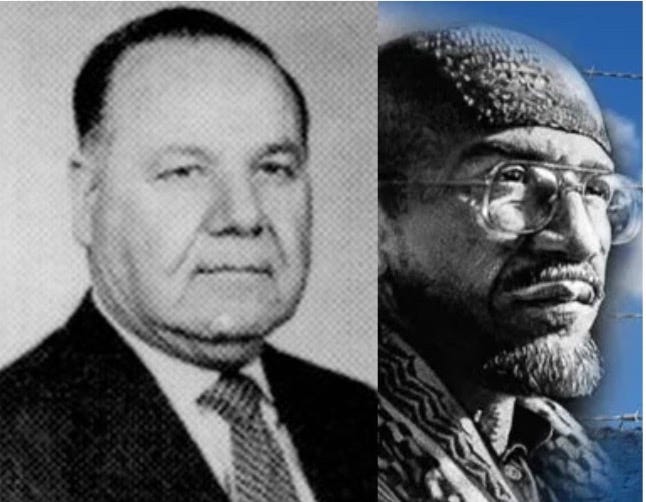
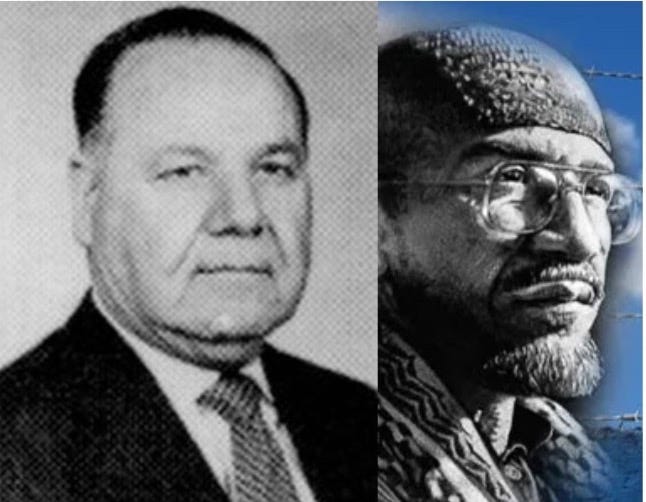
These are the words of Palestinian scholar Ismā’il al-Farūqī (d.1986), the figure who arguably laid down the foundations for the academic study of Islam in America.
If he were alive today, the contours of Islam in America would arguably look significantly different.
At a time when socialism and Arab nationalism were rampant in the 1960s, through his experience as a Palestinian refugee in America, he became more active in campus Muslim Students Associations at Temple University and UPenn. Through interacting with Muslims from all around the world, he shed layers of conditioning and attachments to inherited cultural constructs even, or especially, ones born out of the trauma of the Nakba of 1948.
According to Farūqī’s personal friend, sociologist Ilyas Ba-Yunus relays that the MSA allowed Farūqī to fundamentally change his “self concept.” While visiting Farūqī as a patient at the Johns Hopkins Ophthalmological Center in the spring of 1968, he told him:
“Until a few months ago, I was a Palestinian, an Arab and a Muslim. Now I am a Muslim who happens to be an Arab from Palestine.
From the 1960s onwards, al-Fārūqī became recognized—along with Professor Fazlur Rahman of the University of Chicago and Professor Seyyed Hossein Nasr of George Washington University—as the prominent scholars of Islam in North America who founded the field of the study of Islam as a recognized discipline of study, research and discourse.
He co-founded the International Institute of Islamic Thought (IIIT), and the Islamic Studies program in the Department of Religion at Temple University, where the likes of my former Georgetown advisor, Professor John Esposito trained under him.
Professor al-Fārūqī was a universal man of letters. A Palestinian man from Yafa who served briefly as governor of Galilee before the Israeli occupation, he wrote prolifically, and authored, along with his wife Dr. Lamya al Farūqī—a distinguished scholar of Islamic art in her own right—their seminal work titled The Cultural Atlas of Islam (1986). He also wrote other important books such as, Islam and the Problem of Israel (1980).
In his spiritual and intellectual transformation, I see affinities with my own. I grew up in a postcolonial Arab state, but had to thoroughly spiritually decolonize myself, too: to peel away the layers of secular and nationalist conditioning. To remember that the ummah is not the “Arab” one, but the Muslim one.
Professor al-Farūqī did so at a time when spiritual colonization was rampant: when miniskirts were a sign of progress in Arab capitals, when liberation was simply tied to the symbols of the kufiyyeh, and the rusty keys that promised the awaited return to the watan (the homeland).
He miraculously decolonized his approach to liberation through the imperative of holding on to an ummah-oriented consciousness, alongside a spiritual and ethical interior commitment to the civilizational role of the Islam at a time when the PLO and Arab nationalism offered much louder and much more popular frameworks.
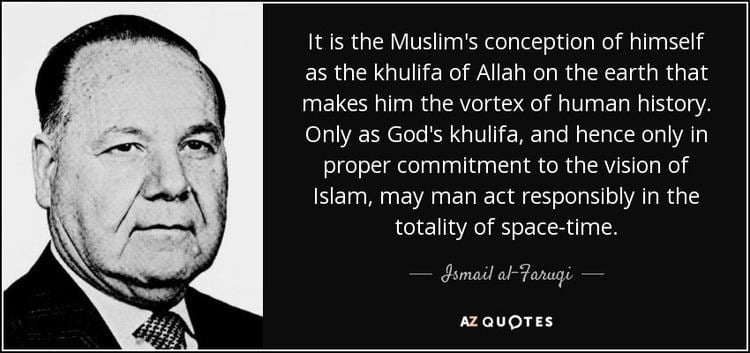
In doing so, he shed decades of cultural and spiritual colonialism: meaning, he did not loathe himself, his unapologetic commitment to Islam, his creedal, essential, absolutist commitment to God. He desecularized his spirit. He did not shrink himself to become more likable to the dictates of respectable society or academia. He spoke freely and unapologetically. He, unlike Edward Said, spoke of the Palestinian cause through a creedal lens, seeing it through a lens rooted in pre-eternity, in revelation, not simply post-colonialism. As an eternal struggle between good and evil.
Who taught you to hate yourself from the top of your head to the soles of your feet? Who taught you to hate your own kind? - Al-Hajj Malik/Malcolm X
It was precisely this, his uncompromising vision of faith-based liberation is what made him arguably all the more powerful and more dangerous to the status quo.
Dr. Farūqī and Dr. Lamya were both stabbed, murdered in cold blood in their apartment in 1986 in dubious and mysterious circumstances that yet remain unsolved, but it doesn’t take a genius to surmise who might benefit from quashing such a powerful Palestinian and Muslim intellectual powerhouse.
He reportedly foresaw his own death according to a paper on him by Sudanese scholar Malik Badri:
In the concluding session of the conference in honor of al-Farūqī held at the IIUM in Kuala Lumpur, Anis Ahmad declared to the audience that al-Farūqī had confided to him that his father had made two special supplications for him: to become a great scholar and to die as a shahīd (martyr).
As quoted by Ahmad, al-Farūqī wondered: “Now I am a scholar, but how can I die a shahīd in the US?” Allah Ta‘ālā accepted both supplications.
Similarly, the 1960s produced another charismatic, visionary African American Muslim giant who transformed himself, and perfectly harmonized and fused Islamic consciousness with black liberation: Imam Jamil al-Amin (d.2025), who recently suffered a slow death in unjust imprisonment by the state’s carceral system under false charges.
If he too were allowed to resume teaching and leading as he did, I venture to say the contours of Islam in America would have looked very different than the suburban respectability Islam we have today.
Just compare this quotes by the late, great Imam al-Amin to that of Dr. Farūqī’s, above:
“I seek truth over a lie. I seek justice over injustice. I seek righteousness over the rewards of evil doers. And I love Allah more than I love the state.”
“When you understand your obligations to the Creator, only then can you understand your obligations to society.”
Like Malcolm, who, days before his death, he told his sister, “They are after me. They won’t rest until they get me”, Imam Jamil Al-Amin too presciently said,
“America, if it takes my death to organize my people to revolt against you,
Then, here is my Life!
But my Soul belongs to my people.
Lasima Tushinde Mbilashaka (We Shall Conquer Without a Doubt).”
It is incredible how the words of the righteous, sacrificial saints often come true and ring true.
What is America undergoing now if not its greatest unraveling after Imam al-Amin and so many shuhada’—from Gaza to Sudan—gave their life as qurban for us to wake up and see what they always saw, but what we were too mentally colonized and spiritually sedated to see: the crystal clear, painfully bare, truth?
It is important to emphasize that these unlikely men came of age in the 1960s, a time much like our present moment. The 60s were defined by moral upheaval and civilizational disorientation, a time when inherited constructs were collapsing right and left and every norm became suddenly contested. The 60s saw intense wars of independence across the global south, racial violence, imperial overreach, and generational shifts that converged to create a culture in which nothing felt stable and clarity was elusive precisely because, exactly like the moment when find ourselves, everything claims to be countercultural, counterintuitive, and hence, incoherent.
Much like today, liberation, revolution, and authenticity were spoken of in the same breath, yet often pointed to contradictory directions, leaving many searching not for novelty but for something more enduring: transcendental anchoring. This is why so many turned to non-traditional modes of authority, to psychedelics and New Age, “Eastern” spirituality. Then as now, the sheer onslaught on meaning makes discernment extremely difficult. But it needn’t be so, because others have tread this path of clarity despite chaos before us.
There is screaming, numbed outrage stifled in all of us, and coherence is the rarest, most elusive gift of all. In such moments, the challenge lies in not merely parroting revolutionary slogans to “resist tyrants,” but to resist the tyranny within: that of spiritual colonialism. The urge to dissociate. To succumb to numbing.
Because of this, in this essay, I invoke the combined example of the two vastly different, but similarly anchored, American Muslim visionaries—Professor al-Farūqī and Imam al-Amin—who were able to conquer themselves and accomplish the impossible: to retain coherence in an age of continuous counterculture and spiritual colonialism.
These ancestral American Muslim giants can serve as a principled anchor particularly for those living inside the imperial core. Inside Pharaoh’s court. Looking back at ancestral struggles, we must be able to stand on their shoulders to distinguish between reactionary gestures that shock the system vs. enduring transcendental commitments that can actually sustain justice over time.
Recently, I attended a talk about Imam Jamil at a local mosque by the Imam of the Oakland Islamic Community Center, Amir Abdulmalik, who knew Imam al-Amin, and summarized the larger-than-life contributions of “the great second shahid” after Hajj Malik/Malcolm. Amir Abdulmalik described al-Jamil’s internal revolution of going from “wearing the black beret of black nationalism, to the kufi/kuffiyeh of Islam.”
For Imam al-Amin, or Professor al-Farūqī—whose lives and contributions were arguably cut short by state repression—to be a true Muslim is about the radical reordering of priorities and going against the grain of societal or intellectual convention. I see too many well-meaning activists more committed to the edicts of Marxism or socialism than those of Islam today. I don’t mean to say that Arab socialist thought or black nationalism cannot teach us a thing. They are most often the only validating frames available to empower the oppressed, provide them with a vernacular of collectivist affinity building, and invite to deeper consciousness.
But the trick is for the conscientious Muslim is not to stay stuck in those constructs and frames as the be all end all. Because what Imam al-Amin taught in his Revolution by the Book is just that: revolution can only happen by THE book (the Qur’an). That only submission to the One, truly internalized and enacted upon, possesses the power emancipate the disempowered. Not to homogenize or erase cultural specificity or ethnic belonging, but towards the mutual goal of liberation through, not despite, the alignment under the power of the Creator.
Notice how it is always the visionaries who transcend the constructs of theories and ideologies and controlled-opposition dissent that get shot or killed: because they shed their own crutches—even their own liberationist frameworks and conditioning. Only through active surrender can the internally revolutionized posses true, “dangerous” activating power. Only those who truly succeed in transcending the state can gain the honor of being shielded and empowered through the singular, pervasive power of Allah, rather than simply reacting to, fighting or hating supremacist systems.
According to an 1967 FBI memo, the architects of COINTELPRO feared in Malcolm and others like Imam al-Amin the “prophecy” of a Black messiah. What they truly feared—and still fear— is the emergence of a fully activated moral consciousness rooted in the perfected trifecta history, faith, and collective memory.
What the state sought to preempt then is what power fears now: coherence of conscience. Coherence with the past, coherence between oppressed people, and the coherence of batin and zahir with the individual spirit.
This is why Islamic consciousness has long been treated as uniquely dangerous, because it refuses fragmentation, holds on to absolutes, and necessitates the inextricable bind between ethics and action. Like I said previously, they fear Islam/”the Messiah”, but Muslims do not act enough like“Messiahs” to realize said fear.
Whether it is the war on “old” native black and brown Muslim consciousness, or the “new” fight against the immigrant “Muslim Brotherhood”, these wars are actually one and the same: they are about the prevention of rooted faith that remembers indigenous pasts as an entryway to living political and moral futures.
That is why the war on coherence is so characteristic of dajallic forces who seek to delude, elude and confuse with a constant barrage of demonic carnage and distraction.
This the war on meaning in full throttled action today: it works overtime to produce perpetually distracted, constantly afraid, spiritually colonized, fragmented consciousness. "Or do you think that most of them hear or understand? They are only like cattle—no, more than that, they are astray from the Truth" (Qur’an, 25:44)
This is why the most radical thing anyone can do right now is to truly and wholly be Muslim. To counteract degeneracy by following the boogeyman they call shari’a, Divine code. Because Islam, when taken seriously, reconnects people to lineage, Divine covenant, Prophetic discipline, and ummatic responsibility—and it is precisely this consciousness threatens systems built on amnesia and chronically choked despair.
Imam Jamil Al-Amin stands as a bridge between the civil rights era and this present collapse of empire: he is both a central figure in Black liberation, and a Muslim leader whose commitment to tawḥīd and justice rendered him irreconcilable with state power. His continued imprisonment under false pretenses mirrors the present struggle for Palestine, where the criminalization of resistance is inseparable from the fear of a people who remember who they are. Across generations, the target remains the same. The onslaught against awakened conscience, unity, and moral clarity continues, but when these truly take root, they cannot be co-opted.
A Muslim needs to fight for dear life to hold on to exactly those things. To differentiate themselves drastically from the mainstream culture of their oppressor: not just the music they listen to, the holidays they celebrate, the intoxicants they inebriate themselves with (replace with dhikr), the food they consume, but through liberating oneself from the false gods they worship on a spiritual and intellectual level, and that includes most isms, however “emancipatory” they may seem. They too, aren’t God.
In other words, to lean in, not out of our ghurabastatus, to be as strangers in this world. When thissystem of monstrous, immorality and mayhem--guided by the “Israel first” agenda— is done ravaging the world and this country, they will be looking to the lone wolves, the resilient Muslims, who, despite all, stood firm and withstood the war on coherence through the power of their faith.
As Amir Abdulmalik said in his talk, to truly change the world, you have to be prepared to end up in three places: 1) The hospital 2) The prison 3) The graveyard. Imam al-Amin ended up in all three.
He also said, those who were effective in fighting injustice understood the fight as primordial. That it is ultimately not about us vs. the system, or the rebel vs. the system, it is about Allah vs. the system. If you lose sight of that, you will always stumble and fall into the devilish ruse and web of fear. If you think the state is all-powerful, your faith is flawed. If you think the degenerate demonic spawn of Epstein and co. are simply too connected and too conniving to be defeated, your faith is still weak. If you think that Allah cannot destroy them in second, you need to seriously go inwards and spiritually decolonize yourself.
This is exactly what these dark forces are counting on: your weak faith. Your spiritual colonization. Your ignorance about the true ethic of Islam.
This spiritual colonization is why Emiratis and Saudis feature so heavily in the Epstein files: in one email, the “Muslim guy” is taking about what the Qur’an has to say about befriending Jews and Christians, and in the same email, he then talks about the “100% fresh Russian female” at his yacht.
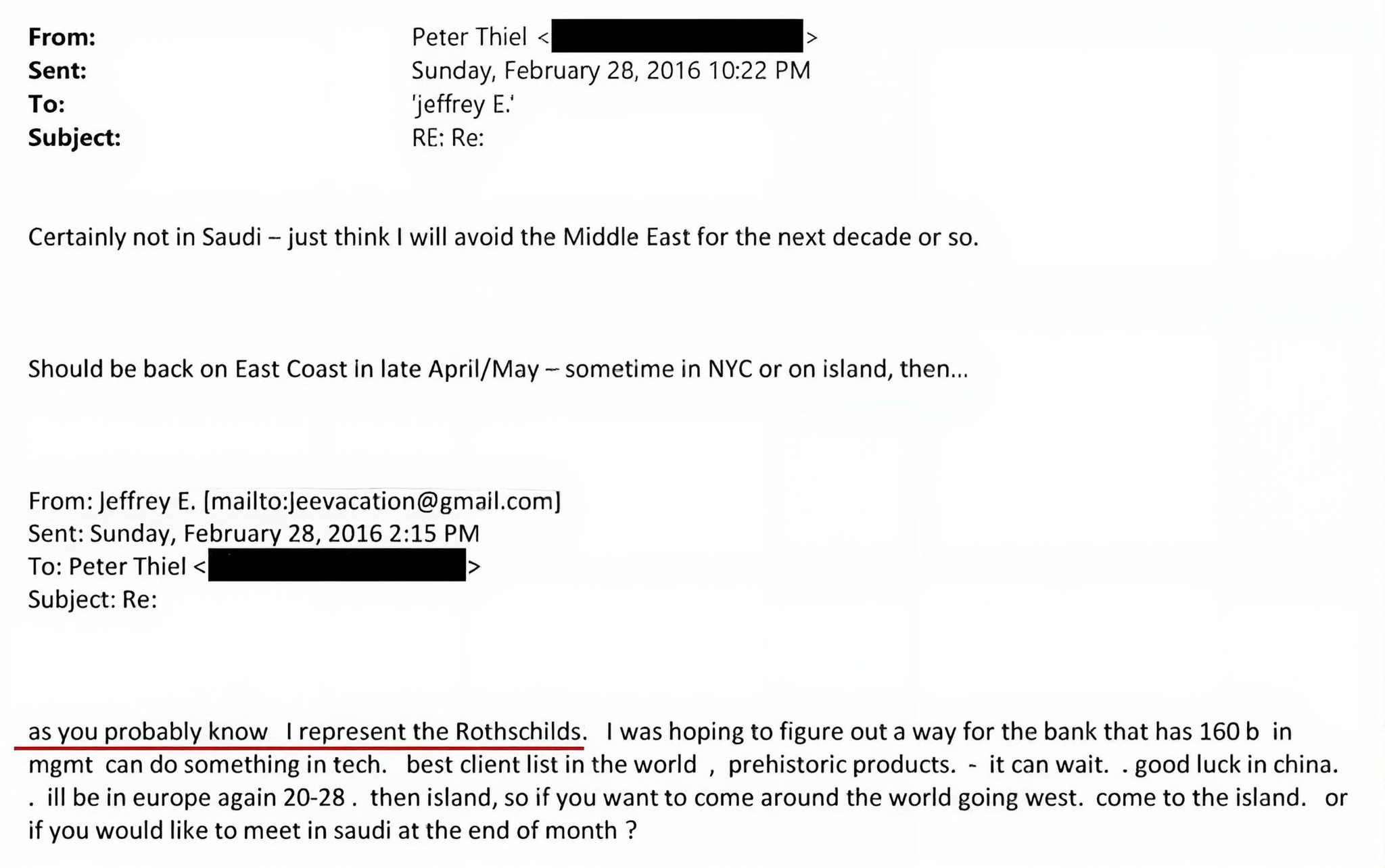
This is why Epstein feels so comfortable inviting Peter Theil to Saudi Arabia, saying “I represent the Rothschilds, would you like to meet in Saudi?” and why he received a piece of the Ka’aba’s cloth as a gift from an Emirati businesswoman: there is no greater symbol for the rampant bastardization of Islam than this. They will literally sell Islam and its holiest sites for their lust, money and access.
How do we expect to be free if we don’t free Mecca and Madina from the dark occupation of Muslim Zionists?
The UAE and Saudi are perfect examples of Islam as divorced from ethics. When ones’ inward beliefs (batin) do not conform on one’s outer actions (thahir). In Islamic theology, nifaq (hypocrisy) is precisely defined as the lack of alignment between the outward appearance/actions and the batin (inner faith/intentions). It is the act of displaying faith, goodness, or obedience outwardly while concealing disbelief, fear, doubt, or evil inwardly.
In essence, these sewer-filled Epstein files do not exist in a vacuum, they have come out of an ecosystem of a general state of incoherence and spiritual colonization that has strategically subdued the power of faith and its mandate to resist injustice and evil.
Each of us must ask ourselves how we are working to restore Islam’s original mandate of truth-telling and resisting moral decay. For example, say might say you believe in Allah’s all-pervasive power and control, and say Allah gave you a platform and knowledge, but you wouldn’t dare to speak out against the UAE and its role in compromising American Islam for example. You might say that is reckless because it “upsets so and so Sidi at Zaytuna” or “I’ll lose an invite to this or that conference,” or, “I won’t get invited to RIS next year,” for example. I am sorry to say this plainly means you still favor dunya over Allah, because you will be asked about your flock. About what you did to lift the harm and nifaq that poisoned Muslim consciousness. To inch humanity closer to Prophetic justice.
From the Arab world to here in America in the Muslim community globally, we are at risk of harboring a theology mired by interior incoherence. Nifaq is endemic: our internal beliefs (batin) and the outward sayings and actions (thahir) are not in tune, nor in harmony. The beloved Prophet ﷺ said this about us in this time. He said, we will be inflicted with wahn, that we would be like the scum of the sea, numerous but useless. When he was asked the reason for that, and what wahn was, he said: “the love of the world and the hatred of death.”

In essence, when one loves the fickle, material, illusory world more than permanence, eternal life, and the reality of meeting the Creator at any given moment, this is a sign of rampant spiritual colonization. It means the heart one’s is in the grip of taghutic incoherence. It means that there is a wide gap between one’s inner and outer realities.
This state leads to the most dangerous outcome of all: the fragmentation of the soul. And we wonder why we are the way we are. The onslaught on coherence and meaning is so severe that we are in peril if we do not course correct and remember the initial dictum behind our very existence.
Ironically, the cabal of the ruling elite are spiritually more aligned than most people of faith, they are more focused than believers in their inward wretchedness—degeneracy, debauchery, child sacrifice and unspeakable crimes— conforms precisely onto the outward actions that result in genocide, land theft, torture coldblooded murder, usury, etc. They too are “spiritual,” only with much more conviction in the other direction. Their batinmatches their thahir perfectly.
The heinous, despicable things they do to women and children in private manifest as crimes externally against humanity at large through domination and subjugation in politics, economics, education and culture.
Only once one has rectified their soul’s allegiance to the All Powerful through upright action, obedience, disciplining the bestial lower self, only then can be worthy of being deputized with leadership of true, lasting and just liberation. Because so long as one’s Islam is bogged down by theoretical study of leftist thought alone, or nationalistic allegiance alone, or identity alone, then one has truly not undertaken a tahqiq(actualization) of their soul’s honored purpose behind existence: becoming a warrior of love and truth-telling for God, by God.
Islam will never re-enter the vernacular of a civilizational force for good if it is still afraid of the materialist, supremacist, cadaver of this debased world.
We will never be seen as Prophetic inheritors if we are still shackled by incoherence and fear, devoid of laser sharp focus.
We can never counteract darkness with light if we don’t actualize the light we carry. This light is not from here. It is from the Kingdom of Malakut where darkness doesn’t exist and has no true power.
This is what our righteous ancestors before us sacrificed their very souls for us to realize: the biggest collateral of genocidal Islamophobia has been our souls.
Our consciousness.
Whether immigrants to America, like the shahidProfessor al-Faruqi, or whether more native to it, like the shahid Imam Jamil al-Amin, both immigrant and native Muslims on Turtle Island need to unite around the locus of emancipatory tawhid that binds them.
Immigrant Muslims need to remember that their struggles are not new: that Muslim presence here was originally always about islah, internal revolution, eradicating false gods and unsettling tyranny rather than sedimenting it.
Islam in the Americas was always treated as a threat to be contained. As early as 1526, Spanish authorities issued royal decrees barring Wolof Muslims because they were seen as too resistant to domination to be safely incorporated into the colonial order. In the nineteenth century, Islam was similarly outlawed in Brazil after Muslims helped lead slave revolts in Haiti and Bahia.
This largely erased history—from early resistance to Spanish conquest, through the revolutionary legacy of enslaved Muslims, to the twentieth-century revival reveals a consistent truth: Islam in the Americas has never been passive or assimilationist. It has persistently unsettled power, insisting on justice and resistance in the face of oppression, echoing the Prophet’s ﷺ teaching that the most noble struggle is to speak a word of truth before a tyrant.
This is a fact essential to the nature of Islam, so, yes, they are right to fear a black or “Muslim Messiah,” because Divine promise cannot be erased, but those sustaining this status quo will be replaced, that is Qur’anic promise, too:
O believers, whoever among you abandons their faith, Allah will replace them with others who love Him and are loved by Him. They will be humble with the believers but firm towards the disbelievers, struggling in the Way of Allah; fearing no blame from anyone. This is the favor of Allah. He grants it to whoever He wills. And Allah is All-Bountiful, All-Knowing.” (Al-Ma’idah: 54)
يَا أَيُّهَا الَّذِينَ آمَنُوا مَن يَرْتَدَّ مِنكُمْ عَن دِينِهِ فَسَوْفَ يَأْتِي اللَّهُ بِقَوْمٍ يُحِبُّهُمْ وَيُحِبُّونَهُ أَذِلَّةٍ عَلَى الْمُؤْمِنِينَ أَعِزَّةٍ عَلَى الْكَافِرِينَ يُجَاهِدُونَ فِي سَبِيلِ اللَّهِ وَلَا يَخَافُونَ لَوْمَةَ لَائِمٍ ۚ ذَٰلِكَ فَضْلُ اللَّهِ يُؤْتِيهِ مَن يَشَاءُ ۚ وَاللَّهُ وَاسِعٌ عَلِيمٌ (54
So whether you shed your wahn or not to join this tsunami of islah that is coming to break the false gods of injustice and incoherence, it is up to you.
You can choose to join the primordial reckoning to come, or be replaced.